Sabina must have realised very early on during her childhood that
her life was going to be no walk in the park. Born unto a world of
poverty, Sabina hardly ever had a childhood to begin with.
Dropping out of school at Grade-7, she found herself married off at
only 14 years of age. Two kids later, Sabina and her day-labourer
husband reached a point where they literally did not have enough money
to survive.
As the closest milk collection point was far away from the community,
it was tough for the producers to sell their milk and get a fair price.
Sabina offered her help in this regard and since then, she has not
looked back.
Sabina began with collecting and selling 10-15 litres of milk and has
now gone on to selling 45-50 litres of milk per day. Along with this,
she has also started a small cattle feed business to augment her income.
With a little help, Sabina climbed out of the unforgiving grip of
poverty and now she uses her income to meet day to day expenditures
along with planning a better future for her children.
Like Sabina, many others have benefitted from an industry that once
faced many challenges. Previously, the dairy industry suffered greatly
from a lack of established linkage between production, distribution and
consumption.
Dairy farmers were not receiving fare prices and the breeds of cow in
their farms would produce low quantities of milk. Then in 1998, BRAC
Dairy was established to help dairy farmers overcome these problems.
What started as a social business soon became a brand, Aarong Dairy,
to be reckoned with, one which soon gained the trust and respect that
few business manage to gather. However, Aarong Dairy's reputation wasn't
based just on the quality of their product but also the story present
in every packet. For buying Aarong Dairy is akin to directly supporting a
community, which is in need of our support. Aarong Dairy then, is a
social statement all by itself.
During its infancy, Aarong Dairy found that though there were plenty
of locals involved in the milk trade, they could not find a permanent
market. In fact, at times they found that there was hardly any demand or
the demand was too erratic to be profitable for them. Low quantities of
milk produced by their cows also meant that milk production was an
expensive process. Poor breeding, limited veterinary services and
shortages in cow feed were some of the other challenges face by dairy
farmers.
Aarong Dairy identified the problems in the sectors and then began to
find ways to rectify them. The first order of business was to establish
both forward and backward linkages in terms of milk production.
In fact, although Aarong Dairy itself was established in 1998, its
origins can be traced much further back, in the early 1980's, when the
BRAC micro finance program aimed to provide funds for ultra-poor farmers
to procure cows and invest in cows. Subsequently, BRAC's artificial
insemination program also came into play, and successfully helped
farmers rear breeds of cows that significantly increased their milk
yields.
Having helped increase production of milk, BRAC now needed to ensure
market access for its farmers at a fair price. This is where Aarong
Dairy fits in.
The organisation began buying the milk that the farmers could produce
at very competitive prices. Because of Aarong Dairy's presence, the
local farmers could finally have guaranteed payments based on their
individual level and quality of production. This was a huge incentive.
Aarong Dairy thus removed the major headaches for the farmers such as
where to store to the milk and how to transport the milk. Aarong Dairy
has gone on to set up 101 chilling plants, with 10 plants set up in the
Northern region, where milk production is low due to unfavourable
climactic conditions. However, Aarong Dairy had no plans to leave any
farmer behind, so the Northern region was included despite the problems.
Furthermore, it was not just the milk producers who benefitted. As
Sabina's story shows, milk collectors were even benefitted and so were
those who were involved in the production of cattle feed.
Along with milk producers, peripheral industries and ancillary
services also were advantaged greatly. Entire villages could be seen
transforming, freeing themselves from the shackles of poverty.
However, bringing in milk from all corners of the country, did throw
up a dilemma of its own. Milk from each region is unique in its
qualities and even taste. To ensure uniformity in all their milk
products, Aarong Dairy instituted a three-step test. These tests help to
establish the homogeneity of the products, so all the products are the
same. The powder milk that Aarong Milk produces is also entirely locally
sourced.
Currently, Aarong Dairy has 101 collection and chilling stations
located in 25 districts, including 10 located in ultra-poor areas. The
enterprise collects 102,559 litres milk daily and serves 50,000 farmers,
64 percent being women. More than 2 packets of Aarong milk are produced
every 2 seconds.
Aarong Dairy, has come quite far in a short span of time given their
ambitions. They have carved a niche for themselves not only for
consumers but also for the producers. In fact, Aarong Dairy is a social
enterprise. The primary objective is not necessarily to become a market
leader, but help create market access for our dairy farmers, and ensure a
fair price for them.
Nothing in terms of quality or even ethics is compromised. Aarong
Dairy isn't just a product; it's a social statement or rather a powerful
business statement that helped not only to preserve but also revitalise
an entire industry.
Next time you purchase a packet of Aarong Milk, remember that you are
not only purchasing something with nutritional value but rather you are
directly responsible for preserving and ensuring the very livelihood of
over 50,000 farmers.
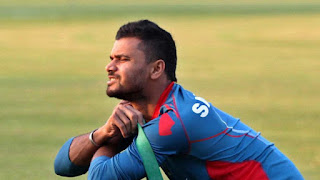
The camp for the much-awaited India series will begin in Mirpur today
with all the players of the 23-member preliminary squad scheduled to
hit the gym at the Sher-e-Bangla National Stadium in the morning.
After a brilliant performance against Pakistan, which saw the Tigers
whitewash them in the ODIs, win the sole T20I and put up record stands
in the Tests, the expectations for the India series, which begins on
June 10, have increased manifold.
In addition to the momentum, the Tigers will be encouraged by the
fact that a single win in the three-match ODI series can lift them above
the West Indies to the seventh position in the ICC rankings. A winless
series though, would send them back below Pakistan to number nine.
While Bangladesh's record against India in both Tests and ODIs isn't
anything to write home about, one believes that the hosts can bank on
the momentum gained from a historic series against Pakistan.
In Tests, Bangladesh have lost six out of the seven matches between
the two sides, managing to draw the lone rain-hit Test in Chittagong in
2007. The last time the two teams met was at Mirpur in 2010. A game
India comfortably won by 10 wickets.
However, that match saw a brilliant 151 from opener Tamim Iqbal,
which helped prevent yet another innings defeat for the Tigers against
India.
The good news for Bangladesh is that Tamim seems to have revived his
form. With a double-century to his name in the last series, the
left-hander seems to be enjoying himself. He has played two matches
against India and has a healthy average of 58.50.
It's not just the left-hander who boasts a good record against India.
Mushfiqur Rahim and Mahmudullah Riyad have scored runs at an average of
61.66 against the men in blue. In addition, the lone Test will take
place on an expectedly flat Fatullah track where one expects batsmen to
flourish.
However, the problem for the Tigers lies in their bowling. Apart from
Mohammad Shahid, the Tigers are yet to find a pacer who is either fit
or in form.
Rubel Hossain and Shafiul Islam, both of whom are recovering from
their respective injuries, have been bowling in the nets regularly over
the last few days and will hope they can make it in time for the Test.
Abul Hasan, who got on the wickets column after quite a while in the
recently concluded Bangladesh Cricket League, is the other option.
While the pacers may not exactly hold the key for Bangladesh in the
Test series, they are expected to play a leading role for the Tigers in
the three-match ODI series in Mirpur.
From the current team, Mashrafe Bin Mortaza (16), Shakib Al Hasan
(14) and Taskin Ahmed (10), are the highest wicket-takers against India.
Bangladesh's chances of winning an ODI against India increase quite a
bit when Mashrafe puts on a good show with the ball, with the skipper
playing extremely crucial roles in each of Bangladesh's three wins
against India.
In 2004, he scored 31 runs and took two wickets. The famous World Cup
win in 2007 saw him bowl beautifully to take a four-wicket haul. In the
Asia Cup in 2012, Mashrafe again took two crucial wickets.
The last time India visited Bangladesh was in 2014. Back then the
team management decided to spice up the tracks and attack India with
pace. That's when Taskin made a brilliant ODI debut by taking five
wickets.
Although the plan then backfired as the Tigers themselves failed to
handle the movement of the pitch, whether the Tigers will try out a
similar strategy this time around remains uncertain.
However, the mood in the camp will be extremely different, as opposed
to the seemingly derailed attitude last year. As skipper Mashrafe
himself put it a number of times in the last few weeks, 'the players are
extremely hungry for wins right now'.

Myanmar's navy seized a boat packed with 727 people off the country's
southern coast on Friday, the government said, about a week after it
found a similar boat it said carried around 200 Bangladeshi migrants.
The nationality of the people on the boat was unclear. Myanmar's
Ministry of Information described them as "Bengalis", using the term the
government uses to describe the country's persecuted Muslim Rohingya
minority as well as immigrants from Bangladesh.
Myanmar insisted it was not to blame for Southeast Asia's latest
influx of "boat people" at a regional crisis meeting in Thailand on
Friday, as the United States said thousands of vulnerable migrants
remained adrift at sea and needed urgent rescue.
More than 3,000 migrants have landed in Indonesia and Malaysia since
Thailand launched a crackdown on human trafficking gangs this month.
About 2,600 are believed to be still adrift.
"Myanmar navy is now transporting the boat to its base on Hainggyi
Island," said Tun Kyaw Kyaw, the Deputy Director General of the
Ayeyarwady Division government, responsible for the area region where
navy base is located.
The island is also on Myanmar's southern coast, close to the place where the boat was seized.
"After sending the people to the island, we will investigate them,"
said Tun Kyaw Kyaw, adding that the examination was necessary to
determine their identity.
Pictures posted on the Ministry of Information's Facebook page showed
scores of men huddling shoulder-to-shoulder under the sun on the front
deck, while uniformed officials - one of them carrying a rifle - stood
above. Women could be seen crammed together in the boat's cabins.
The navy found the boat 30 nautical miles off Myanmar's southern
coast in the Andaman Sea. The government said there were 608 men, 74
women and 45 children on board.
Social business has created hopes
of eliminating poverty from the world by generating employment,
speakers said at a discussion yesterday.
Many countries want to adopt the idea of social business, a
brainchild of Nobel laureate Prof Muhammad Yunus, they said, while
sharing their experiences of promoting social business in their
countries such as the USA, China, France and Germany.
They spoke at a plenary session on “sharing experience -- social
business movement around the world” as part of the programmes of the
sixth Social Business Day at Bangabandhu International Conference Centre
in Dhaka.
Grameen Danone, a social business venture established in 2007
Social business has created hopes
of eliminating poverty from the world by generating employment,
speakers said at a discussion yesterday.
Many countries want to adopt the idea of social business, a
brainchild of Nobel laureate Prof Muhammad Yunus, they said, while
sharing their experiences of promoting social business in their
countries such as the USA, China, France and Germany.
They spoke at a plenary session on “sharing experience -
Social business has created hopes
of eliminating poverty from the world by generating employment,
speakers said at a discussion yesterday.
Many countries want to adopt the idea of social business, a
brainchild of Nobel laureate Prof Muhammad Yunus, they said, while
sharing their experiences of promoting social business in their
countries such as the USA, China, France and Germany.
They spoke at a plenary session on “sharing experience -- social
business movement around the world” as part of the programmes of the
sixth Social Business Day at Bangabandhu International Conference Centre
in Dhaka.
Grameen Danone, a social business venture established in 2007, is
fighting malnutrition in Bangladesh through production and distrib


